
David gives an update on his artwork: 02
In January, I referenced my intent to create a series of six pieces for the Parable of the Prodigal Son. Following in the footsteps of the Spanish Baroque painter, Bartalomé Marillo, there is great satisfaction in depicting one of Jesus’ most beloved stories.
In Luke 15, Jesus offers a reply to the Jewish leaders for their murmuring against his practice of showing good will to sinners. The Parable of the Prodigal Son, contained in 15:11-32, is the final and most complex of three illustrations depicting the joy that comes as a result of one sinner repenting.
What makes the final parable so cherished by successive generations of artists and Christians has much to do with its complexity. The story is emotionally gripping by the addition of human characters instead of just sheep and coins. There is pride, envy, and ingratitude all on display against the indiscriminate love of the father.
The dramatic elements of the third illustration in Luke 15 also serves as an indictment against the Jewish leaders of Jesus’ day. The prodigal son takes all the benefits of being a beloved son; he claims his inheritance; and then he repudiates his father as a symbol of his ingratitude. When the indiscriminate love of the father overshadows everything the prodigal has done, the older and more obedient son is left to wonder the benefits of his own life choices.
Sometimes Jesus accomplishes the goal of a particular parable with a little twist. If the obedient son did all the right things to outwardly show his sonship, shouldn’t he love what his father loved? And shouldn’t a good son find a way to rejoice in the rejoicing of his father?
In the parable of the two sons, Jesus turns the concept of merit based religion upside down. The prodigal son becomes the host of a celebration for his return, and the older son is left in a state to wrestle with his own envy. It is taught to children in every culture about earning rewards. The third grade class I was a part of even had a store to exchange tokens for nice things. And Jesus points out—this is not how the kingdom of God works. It is an economy of grace.
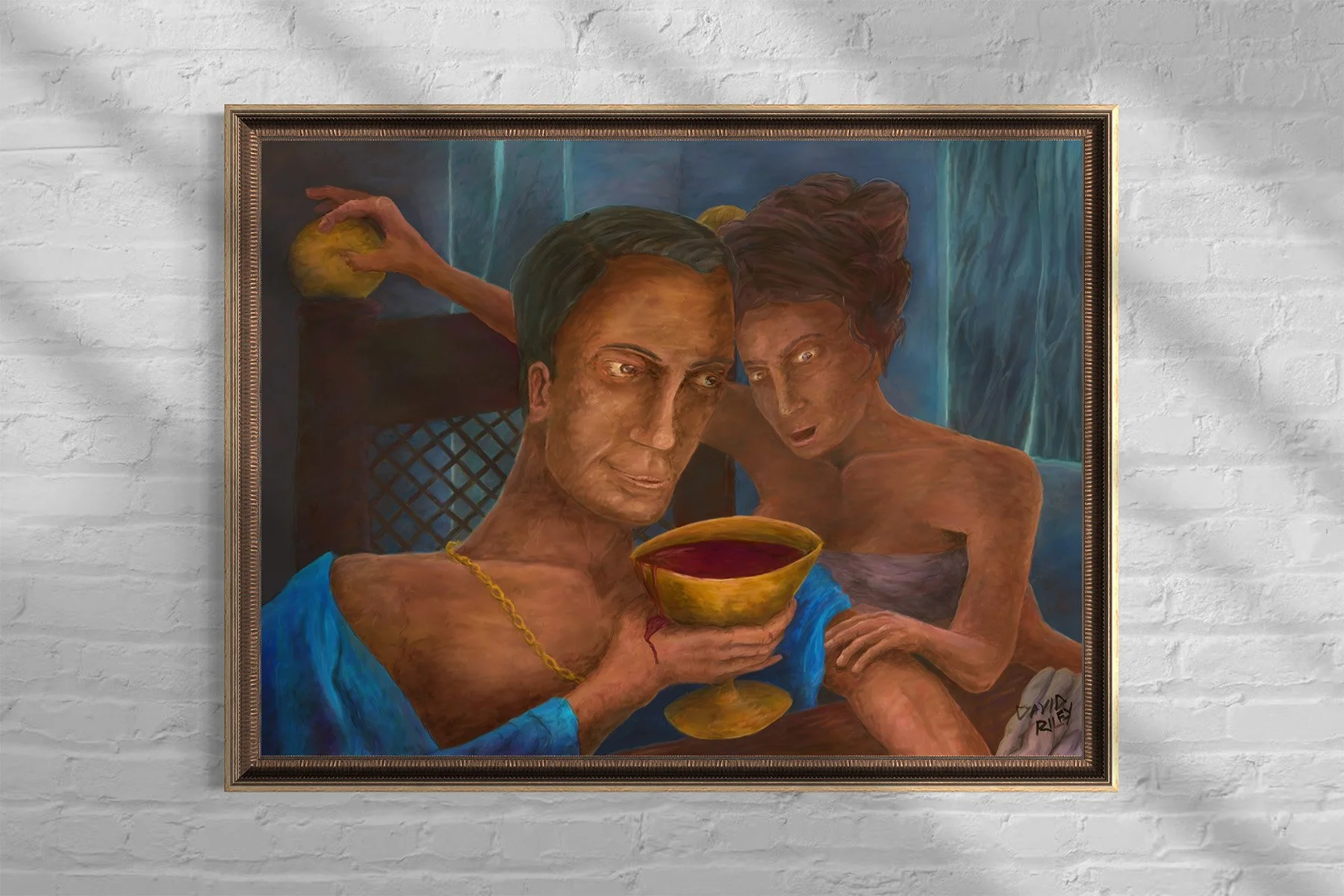
The second of the series of my work portrays The Lostness of the Prodigal Son, and it is scandalous and provocative. Illustrating the younger son in a state of demise was enjoyable to do, but it was also something I was eager to get through and put behind me. The freedom in not taking the content too seriously gave a little more creativity to make design choices I might not have made otherwise. But I’m glad its done and is the last of that kind of image for a while.
After a short break from my labors, the process begins again. I put together some ideas and then begin to draw them down before they vanish. The next step is a few weeks of refining the image through line, shape, and value to make it a positive experience to view the entire layout. Finally the picture is ready to paint, which might take two more months.
